Trinity Valley Senior Care

Assisted living is a wonderful middle ground for many seniors, providing a community and help with basic tasks. However, care needs can change rapidly. Understanding when a loved one has “outgrown” traditional assisted living is vital for their safety and your peace of mind.
1. Recurring Falls and Physical Frailty
Standard assisted living facilities typically have a staff-to-resident ratio that allows for
occasional help with mobility. However, if your loved one is falling frequently or can no
longer stand up without the help of two people (known as a “two-person transfer”), they
likely require a Skilled Nursing Facility (SNF) or a higher level of clinical support.
 
2. Cognitive Decline & “Exit Seeking”
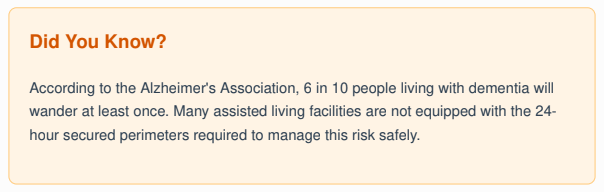
Traditional assisted living is often an “open” environment. If a loved one starts wandering,
becomes confused about where their room is, or tries to leave the building (exit seeking),
they are no longer safe in an unsecured setting. This is the primary indicator that a
transition to Memory Care is necessary.
 
3. Unmanaged Medical Needs
Assisted living staff are often med-techs, not necessarily Registered Nurses (RNs). If your
loved one’s medical condition now requires complex wound care, daily injections, sliding-
scale insulin, or the use of a mechanical lift, their needs have moved into the realm of
long-term clinical care.
 
4. Changes in Eating Habits and Hygiene
If you notice significant weight loss, dehydration, or a decline in personal hygiene despite
being in assisted living, it may be because they can no longer follow through with the
“cues” provided by staff. When a senior needs “hand-over-hand” assistance to eat or total
assistance with bathing, they require a higher level of dedicated care hours than standard
assisted living provides.
 
5. Behavioral Symptoms and Aggression
Dementia-related psychosis or aggression can sometimes occur as the disease
progresses. When a resident becomes a danger to themselves or others, or if their
behaviors disrupt the community to a point that the facility can no longer manage them, a
specialized behavioral or memory care unit is the safest option.
 References:
1. Alzheimer’s Association. (2023). 2023 Alzheimer’s Disease Facts and Figures. Special Report on Caregiving.
2. National Center for Assisted Living (NCAL). (2022). Resident Acuity and Staffing Trends in Assisted Living.
3. Centers for Medicare & Medicaid Services (CMS). Assessing Care Levels: Skilled Nursing vs. Assisted Living.
 

Related Posts: